Industrial group for the home
Structuring a product development management system for a growing industrial group
DC is a family-owned industrial group specializing in products for the home: gates, fencing, guardrails, shutters and garage doors. They brought me in as a Notion consultant for companies to structure the management of their product projects.
1 · Context
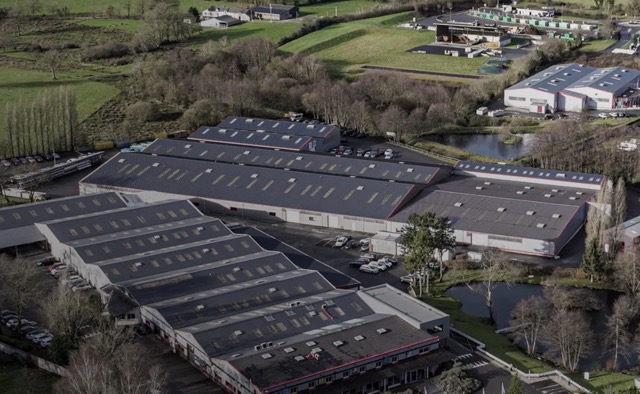
The company brings together around 340 to 350 employees across two production sites near Nantes, with several brands and business lines contributing to product range development.
At this stage of growth, between a structured SME and an industrial mid-market company, DC is gradually strengthening its group-level operating model while preserving a strong field-driven culture. The organization relies in particular on cross-functional support teams (IT, Finance, Marketing and the Design Office) which play a key role in coordinating between sites, product teams and operations.
This creates a demanding environment: technical products, development cycles involving several departments, and a growing need for shared visibility at group level. At that scale, structuring a tailored Notion workspace is less a tooling project than an organizational one.
2 · Challenge
The brief at a glance
- Move away from fragmented ways of working
- Secure the full project lifecycle
- Create a simple shared operating language
- Give leadership a consolidated view
- Make product documentation reliable
The challenge was not simply to deploy Notion in an industrial group of 350 people, but to structure a genuine operational management system capable of aligning teams across two sites, several brands and four cross-functional departments.
DC needed to move away from fragmented ways of working across Excel, emails, paper documents, notebooks and locally held information, in order to make product development more readable, reliable and collaborative. The central objective was to secure the full lifecycle of industrial product projects: from idea to launch, through market research, prototyping, industrialization, technical documentation and ownership tracking.
For field teams, marketing, the design office, procurement and production, the goal was to create a simple shared operating language, so that everyone knew where to find information, which actions to take, who was responsible and where each project stood. The system therefore had to meet a dual requirement: give leadership a consolidated view of project progress, while giving employees a practical tool to reduce omissions, streamline collaboration between sites and make product documentation more reliable.
3 · Roadmap
- 1
Audit of existing processes
Audit of existing processes, with a focus on the Design Office, product development flows and cross-functional collaboration.
- 2
Migration to a group workspace
Migration of isolated Notion initiatives into a centralized and secured “Business” workspace for the group.
- 3
Notion relational database
Design of a relational information system connecting projects, procedures, meeting notes, brands and departments.
- 4
Automation of the step-by-step process
Automation of the creation of the 61-step “Marche À Suivre” process when a new project is launched, covering the market research, prototyping and industrialization phases.
- 5
Dashboards by brand and by role
Creation of personalized dashboards by brand, department and user, including personal “My projects” and “My tasks” views.
- 6
Tutorials and training
Production of targeted video tutorials and facilitation of remote and in-person training sessions to support adoption.
- 7
Securing the workspace
Securing of the workspace through granular access settings and locked database structures to protect the system from accidental misuse.
4 · The transformation
Before
- Information was scattered across multiple tools and formats: Excel files, post-its, paper documents, notebooks and email threads.
- There was no central system for tracking the full lifecycle of industrial product projects involving R&D, procurement, production, marketing and technical documentation.
- Meeting decisions and follow-up actions were not captured reliably, creating operational gaps and forgotten next steps.
- Outlook was used as the default follow-up system, generating too many emails and making project steering more difficult.
- The lack of structured documentation created a business risk: products could move forward without all the required technical materials, impacting customer satisfaction and after-sales support.
- Collaboration between the two production sites lacked fluidity.
After
- DC moved from scattered files and informal follow-up to an integrated operational system where project data flows between teams and departments.
- Project progress became easier to manage thanks to clear indicators: percentages, milestones, responsibilities and deadlines.
- Marketing teams became significantly faster at updating complex documentation such as price lists and technical guides.
- Meeting notes, technical documents and project histories are centralized directly within each project page, reducing time lost searching through emails and servers.
- Teams adopted new daily collaboration habits, with the system becoming less of an administrative burden and more of a practical tool for clarity and follow-up.
- Responsibilities became clearer, with owners and contributors assigned to each step of the process.
- The system helped DC build a solid operational foundation for industrial product development: more visibility, fewer forgotten actions, better documentation and smoother collaboration between sites.
Warren fully understood our problem and built the Notion tool around our needs. It was essential for me to apply a digital project management solution in an industrial environment. Warren was the perfect partner on this project: pleasant, patient and highly professional, and the tool is finely tuned for everyday work.
 Jean-Blaise RuelR&D Manager, DC – Design & Conception
Want to talk?
20 minutes, Free
Pick a time