






Is your system slowing your growth?
Check the situations that match your day-to-day.
From noise to competitive advantage
I turn Notion into an operational control center: a single foundation to centralize knowledge, shape projects, clarify workflows, and connect the right tools. AI then amplifies the system, without adding noise.
Blurred system
Clarified operations
Strengthened advantage
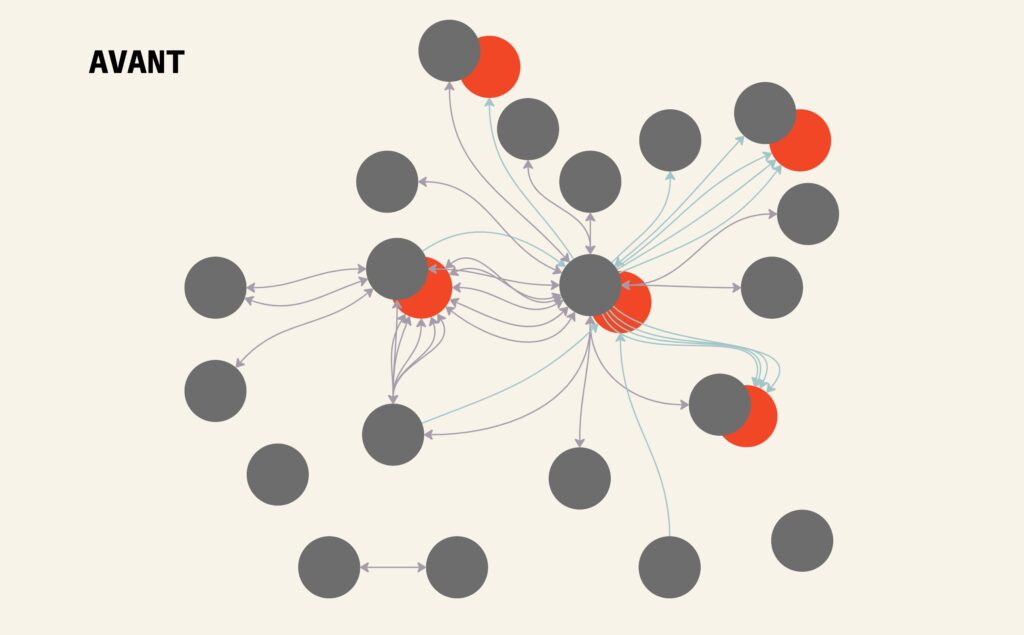
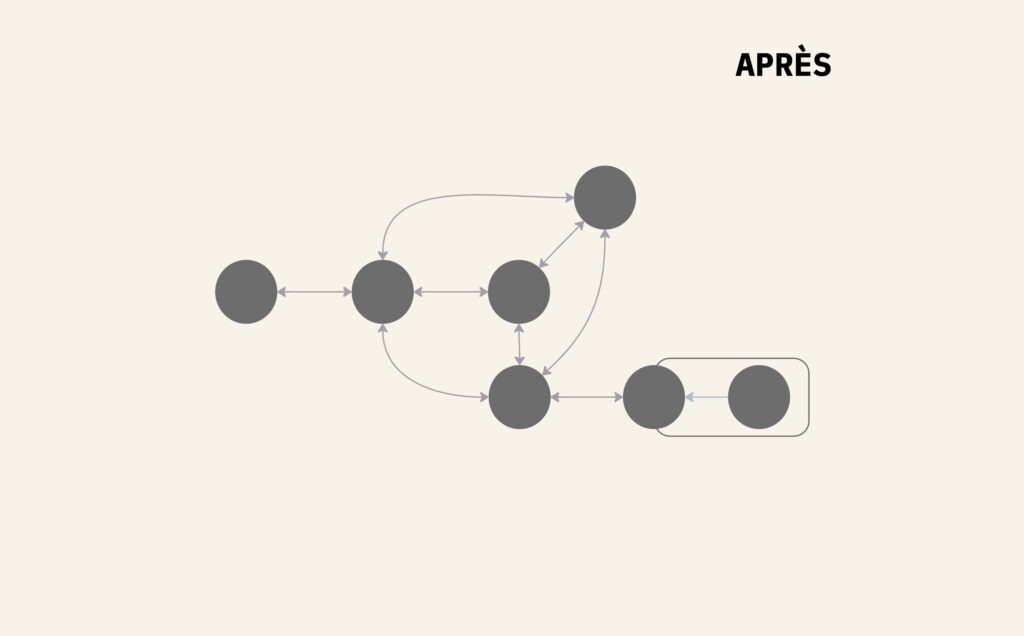
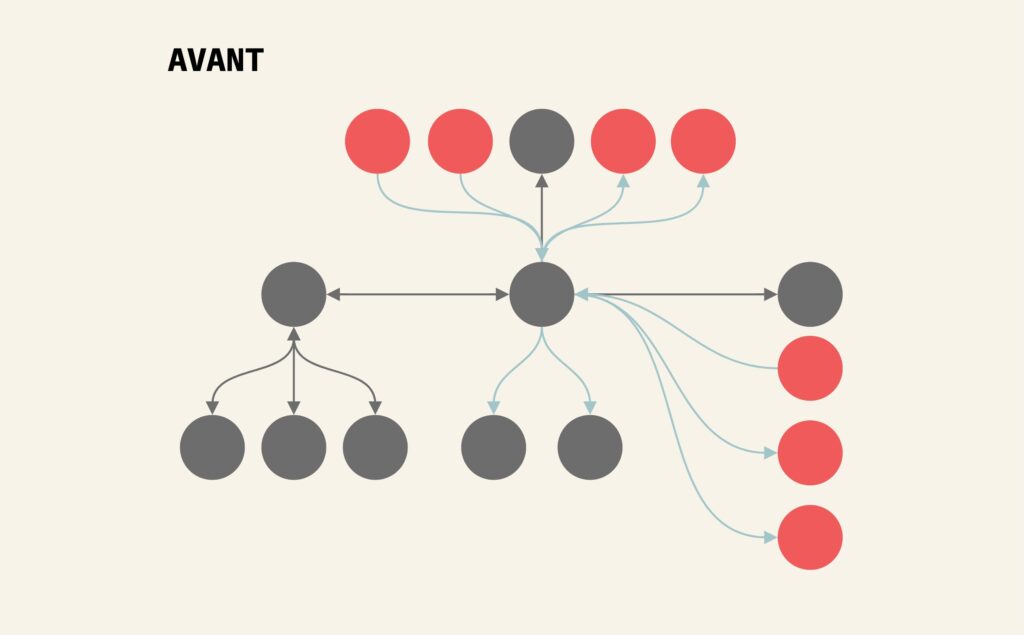
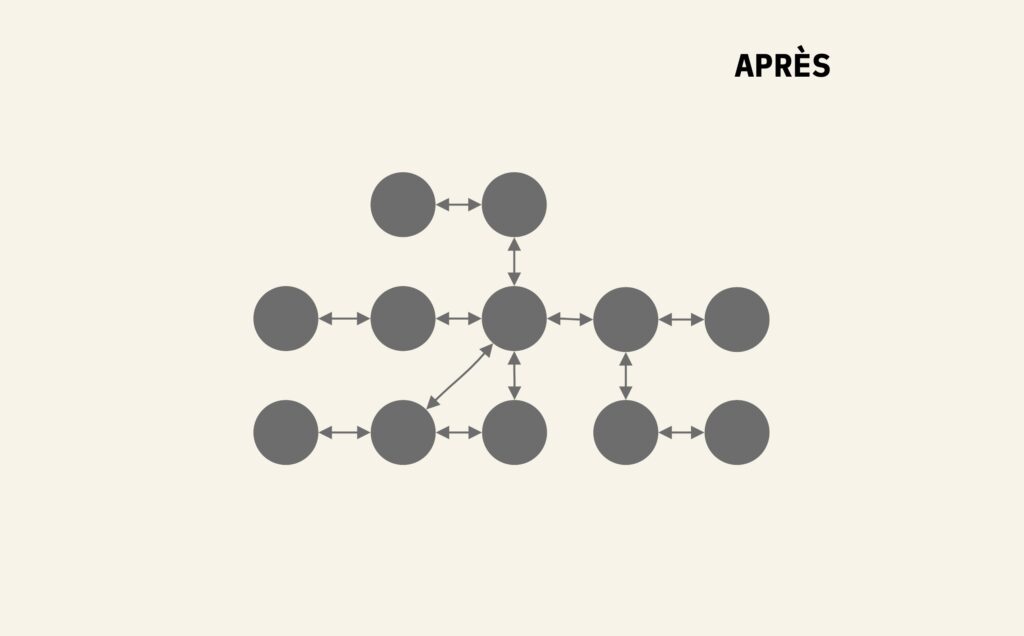
Before / After
 View more →
Challenge: Client operations were spread across Excel, Slack, and Frame.io.
Transformation: A unified studio workspace to manage the entire client lifecycle.
Result: Production cycles shortened by 30% through better visibility into tasks, deadlines, and approvals.
Stack: Notion
 View more →
Challenge: Projects were scattered across teams, tools, and files.
Transformation: A centralized, easily accessible project repository.
Result: 100% of the project portfolio consolidated in one place to speed up decisions and clarify strategic priorities.
Stack: Notion, Make, Google Sheets
Manifesto 2024→2026
With the rise of generative AI, we’re entering an era of standardization and industrialization of intellectual production. That doesn’t mean tools like ChatGPT should be tossed aside. All I’m saying is that in this new game, it’s the way you use them that really sets you apart.
Today’s businesses, tech or not, can tap into the latest technological breakthroughs. Time and cost barriers are falling away. The gap between users and creators is shrinking. It’s time to co-build the tools we work with, for better alignment, smoother adoption and a lot more enthusiasm.
The no-code approach offers many powerful ways to follow this path – one where quality work is supported by tools that let you build processes that feel like you. That reflects your teams, your work and the way you do things.
I believe how you do things matters. To me, it’s the art of infusing your own uniqueness into how things are done. By cultivating it, we create a work environment that reflects who we are, inspiring action, both individually and collectively. The way we do things frees us to be demanding and creative. It elevates our craft, signs a work.
The way is inherently unique. It’s shaped by your company culture, activity, vision and common sense.
That’s the path I’m taking, and one I’m excited to take you along with me.

Newsletter

AI is accelerating one thing: standardization.
Companies use the same tools, copy the same methods, and promise the same gains. As a result, many become more efficient, but also more interchangeable.
A newsletter for decision-makers who want to spot where their industry is starting to standardize and build operational systems that keep them from becoming interchangeable.
This conversation is fictional.
It's an FAQ in disguise.
Nobody writes like this on WhatsApp.
Warren Perez’s FAQ
onlineWho are you and what do you do?
I’m Warren Perez, AI Native Operating System Designer.
I help companies turn their operating systems into a powerful differentiator.
My work is about designing human–AI collaborative spaces that fit the way each organization works and amplify its organizational knowledge.
I’m based in France and work remotely with clients around the world.
Why transform your operating system in the age of AI?
I believe the age of AI brings two major risks:
1. Operational noise — driven by AI’s explosive increase in production capacity, combined with the unchecked proliferation of digital tools.
2. The commoditization of services — as businesses rely on the same probabilistic systems (LLMs), they increasingly converge toward generic offerings that are easy to replicate in-house and hard to differentiate and monetize.
Which tools do you use?
The ones companies actually use.
I work both on setting up a Notion workspace and on redesigning existing ones, connecting your tools through automation with Make, n8n, and APIs.
My platform of choice is Notion. I see it as the heart of the system: a central knowledge hub and knowledge management platform that brings together documentation, projects, and processes.
Its flexibility and connectivity allow companies to build a tailor-made digital workspace that adapts to real business processes and integrates with the tools they already use.
Just as importantly, Notion AI and its Model Context Protocol (MCP) make it possible to put artificial intelligence and automation to work in support of growth and value creation.
With a well-designed system, teams spend less time searching for information, while AI can reliably build on your company’s knowledge, documentation, and expertise.
Why work with you?
I’m a Tier 3 Notion Service Specialist — the highest level of official Notion consultant certification — and I specialize in automation tools like Make and n8n, as well as generative AI.
Over the past five years, I’ve worked with more than 60 organizations of all sizes — from SMBs and mid-market companies to large enterprises, nonprofits, and public-sector organizations — helping them design knowledge management systems, digital workspaces, and operating systems.
Clients include Spendesk, Getaround, the Philharmonie de Paris, and SPOA Agency.
I began my career as a growth marketer for high-growth startups after earning a Master’s degree in Web Project Management from the IAE Montpellier.
My background in marketing gives me a strong business perspective, allowing me to connect business processes, operations, and technology to value creation while maintaining a strong focus on designing frictionless user experiences.
Why structure knowledge before adding AI?
To get the most out of AI, you need to give LLMs the context that makes your business unique: your positioning, values, culture, deliverable templates, editorial tone, processes, vision.
You also need to define your constraints and make deliberate choices about how AI should be used.
That only becomes possible when your company operates within a documented, well-structured collaborative environment built around knowledge and execution.
Otherwise, you’re likely to scatter your efforts, creating more noise and inconsistency instead of more value.
What kind of company is this work for?
This work is designed for companies whose organization is no longer aligned with their business priorities — often because growth has exposed systemic challenges.
They’ve realized they need to become more intentional about how their operating system is designed. They typically use Notion and other modern tools, but in an unstructured way.
They’ve started adopting AI through disconnected initiatives that produce only marginal gains, and they know they need stronger foundations if they want generative AI to amplify their expertise and organizational knowledge.
They’re often trying to automate low-value work so they can focus on what truly sets them apart, but they haven’t found the right system to make it happen.
Got a real question? That field really works, it opens WhatsApp.